Mera Tutor

Category: Artificial Intelligence

MeraTutor.AI Our Latest Blogs

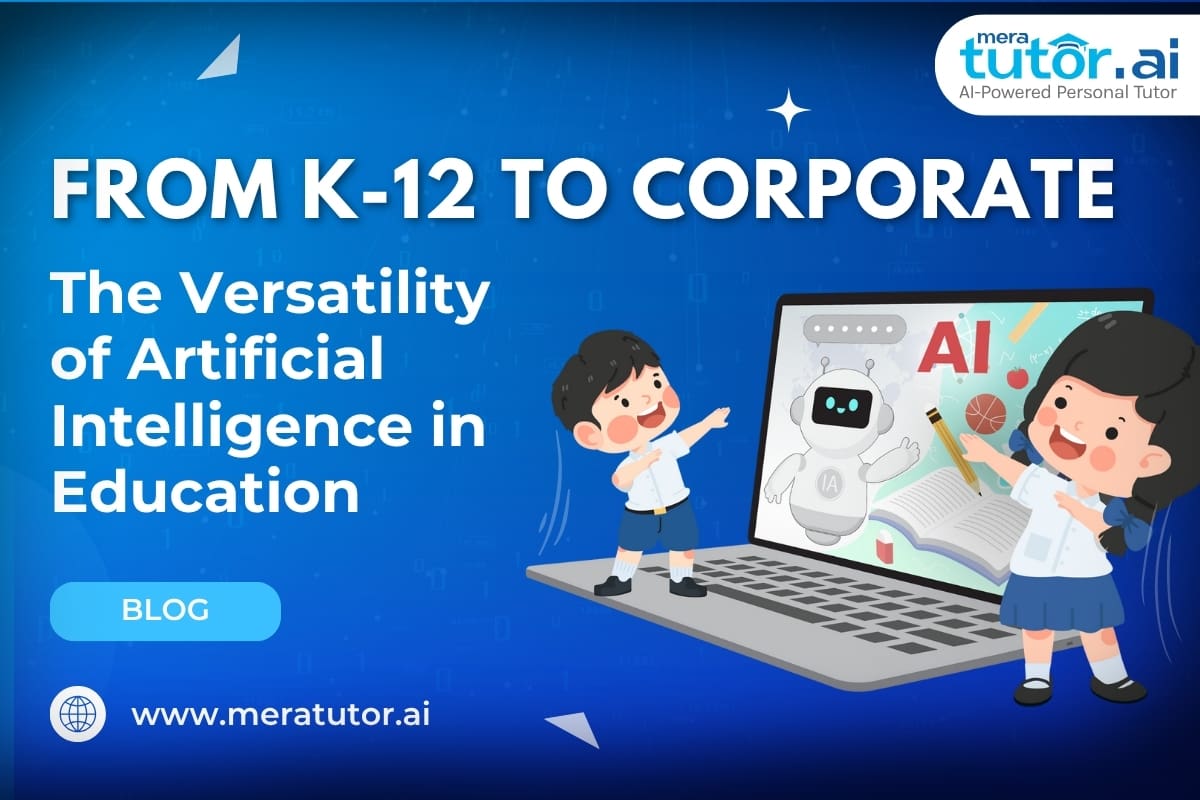
From K-12 to Corporate: The Versatility of Artificial Intelligence in Education 

In K-12 settings, AI enables the creation of customized learning pathways that allow students to progress at their own pace, fostering a more engaging and effective learning environment. In higher education, AI tools streamline administrative processes and provide valuable insights that enhance teaching strategies. Moreover, the corporate training sector is leveraging AI to develop scalable solutions that meet the diverse needs of adult learners. 
Read More

AI Agents in EdTech: Bridging Gaps in Personalized Learning

AI agents – intelligent systems that interact with students, educators, and institutions to optimize education. Unlike traditional digital tools, AI agents adapt, learn, and respond dynamically, making education more efficient and engaging. They assist in automating tasks, analyzing student progress, personalizing learning pathways, and offering real-time support through AI-powered chatbots and virtual tutors.

Read More

Agentic AI in Education: Transforming Learning Through Personalization and Innovation 

Preceded by AI agents, Agentic AI represents a new paradigm in educational technology. It’s not just about automation, but a step further – it’s about creating systems that are autonomous, adaptable, and capable of making decisions in real time. Imagine a virtual tutor that tailors lessons to individual learning styles, provides instant feedback, and evolves based on each student’s progress. This isn’t just a futuristic dream – it’s happening now.

Read More

AI for Course Creators: How to Develop Content More Efficiently with Artificial Intelligence

Statistical evidence underscores the transformative impact of artificial intelligence on the efficiency of course development. For instance, AI tools can automate content creation and grading, drastically reducing the time educators spend on administrative tasks. This not only enhances productivity but also fosters a more personalized learning environment where content can be tailored to meet individual learner needs. Research indicates that such personalization leads to improved engagement and better learning outcomes. 

Read More

Implementing RAG with OpenAI: A Step-by-Step Guide

Retrieval-Augmented Generation is hybrid approach that combines two key components: 

Retriever – Fetches relevant data from an external knowledge source, such as a database, document corpus, or API. 

Generator – Produces responses based on the retrieved data, ensuring the output aligns with verified information. 

By leveraging the retriever to provide a foundation of factual context, the generator operates within a more grounded framework, reducing the likelihood of hallucinations.

Read More

Embracing AI-Powered Learning Management System for Smarter Schools

With technology playing an increasingly central role in classrooms, schools are now leveraging advanced tools to enhance the teaching and learning experience. From interactive online lessons to real-time data analytics, the possibilities are endless – and the stakes are high. For schools to remain relevant and effective, staying updated with cutting-edge educational tools is no longer optional – it’s essential.

Read More

AI for Teachers: How AI is Changing the Role of Modern Teachers?

The world is currently riding on the wave of artificial intelligence, and one of its most transformative applications is in education. Specifically, generative AI – an offshoot of AI capable of producing content, adapting to tasks, and analyzing data – has opened up new opportunities for teachers and students alike. While AI is often associated with futuristic tech, its adoption in classrooms is already delivering tangible benefits. For teachers, artificial intelligence offers a fourfold advantage by enhancing how they teach, interact with students, and manage their workload.

Read More